
Redefining Access to Justice for Self-Represented Litigants with Disabilities: Applying U.S. Court Accessibility Strategies to the Canadian Context

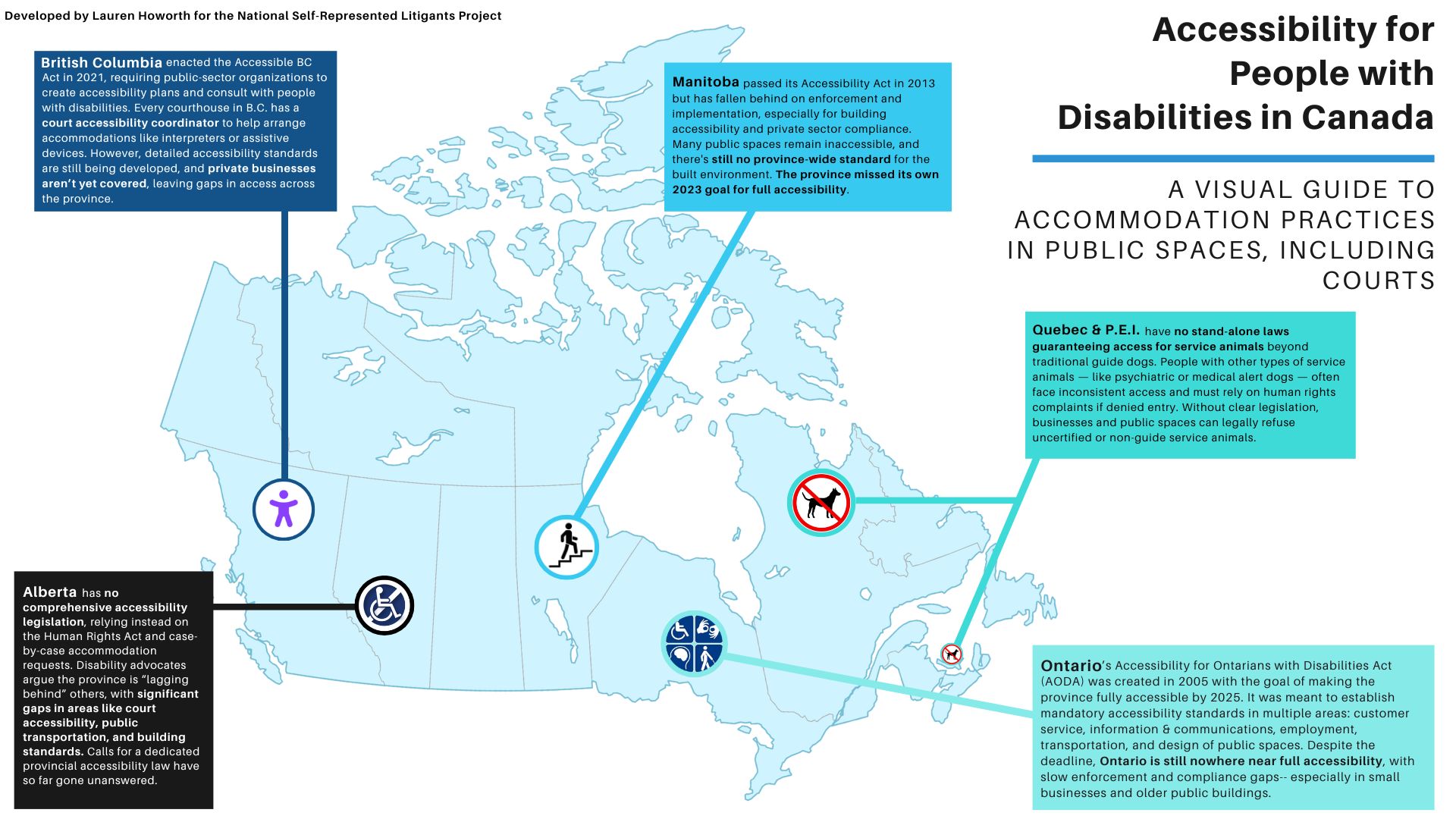
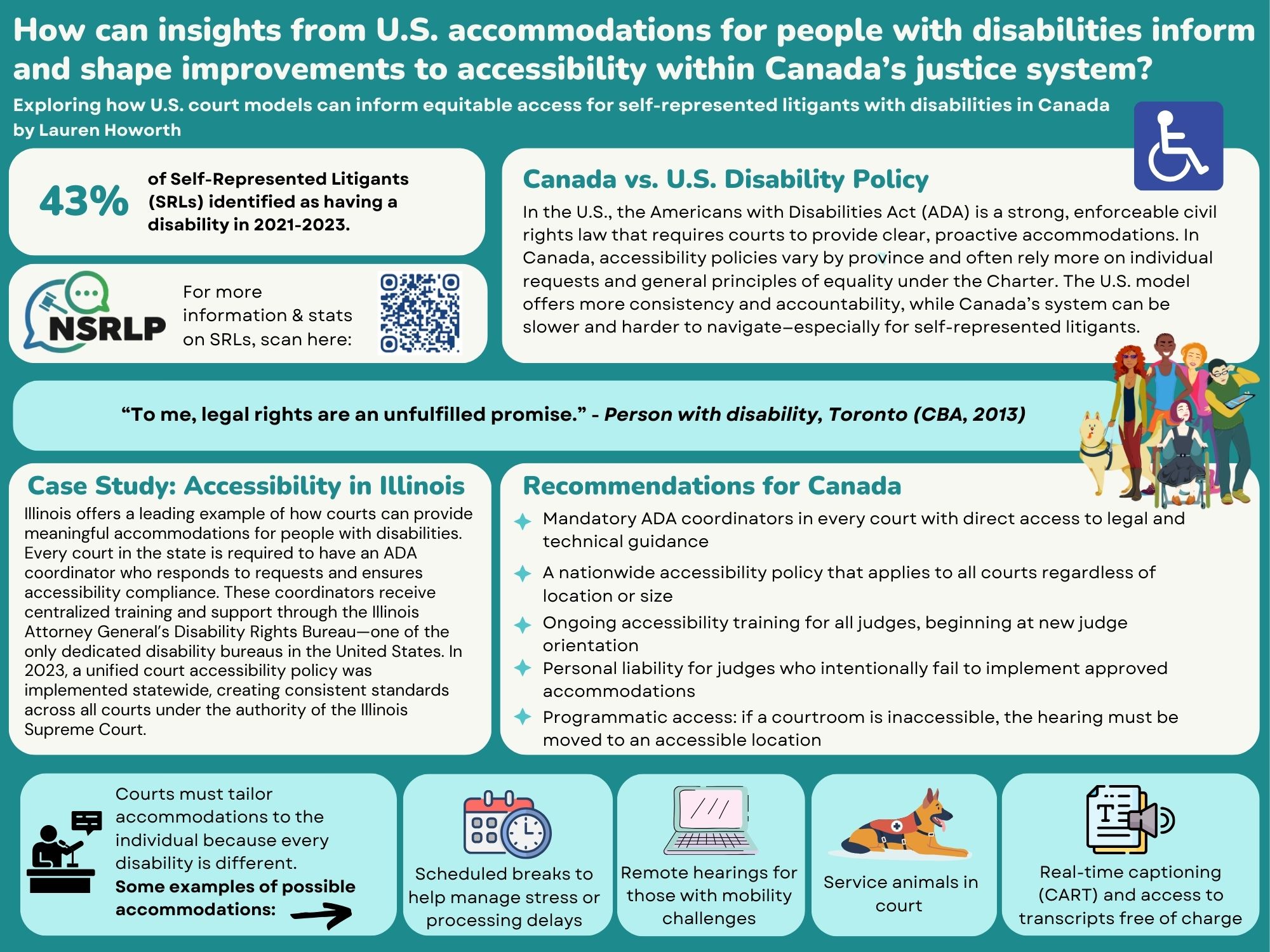
“Redefining Access to Justice for Self-Represented Litigants with Disabilities” examines how court accessibility strategies developed under the Americans with Disabilities Act in the United States can inform efforts to improve access to justice for self-represented litigants with disabilities in Canada. Using Critical Disability Theory as a framework, the analysis demonstrates how systemic ableism, vague legal definitions, and uneven enforcement limit meaningful court participation for people with disabilities. The Illinois model offers a promising structure for reform through its centralized oversight, its use of Court Accessibility Coordinators, and its emphasis on proactive accommodation practices. However, challenges such as variability in enforcement and under-recognition of cognitive and invisible disabilities remain. The paper explores how Canada’s federal and provincial accessibility frameworks could adapt lessons from the U.S., emphasizing the need for robust policy design, inclusion of disabled voices, mandatory training for legal actors, and enforceable accessibility standards. Ultimately, true access to justice demands not only physical accommodations, but cultural shifts that recognize dignity, diversity, and the lived realities of disability in court processes.This paper was written by Lauren Howorth in partnership with the NSRLP during her time in Trinity College’s Community Research Partnership in Ethics course at the University of Toronto.